
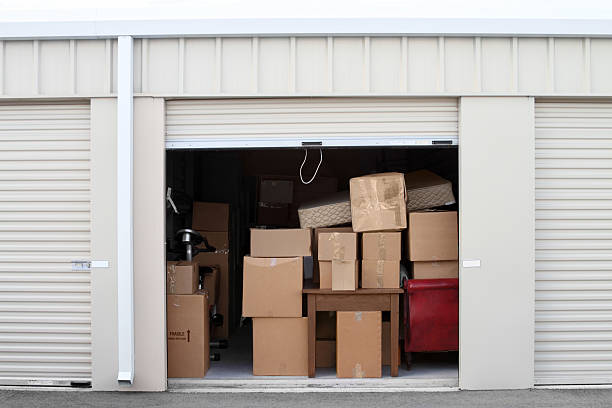
Every spring, college move-out puts enormous pressure on local storage options. Students finish finals, leave dorms within days, and suddenly need somewhere to put their belongings. However, traditional storage facilities were not built for this surge. As a result, availability tightens, prices spike, and access becomes inconvenient at exactly the wrong time.
Because universities move thousands of students off campus simultaneously, storage demand spikes in short, predictable bursts. According to the problem with traditional moving and storage options for students, traditional storage services were not designed around academic timelines or mass dorm move-outs. Therefore, when finals week ends, storage demand rises across entire regions, not just around a single building. Consequently, traditional storage models struggle to absorb that surge.
Moreover, students often make storage decisions under pressure. Therefore, they accept inconvenient locations, limited access hours, and confusing pricing. As a result, frustration builds quickly. Although storage facilities offer space, they rarely offer systems designed for college move-out.
Why College Move-Out Overwhelms Traditional Storage
Traditional storage works well for steady, predictable demand. However, college move-out compresses demand into a few weeks. Because of that compression, facilities near campuses fill up first. Meanwhile, facilities farther away remain available but become harder to access without a car.
Additionally, students need short-term storage. However, most storage contracts assume longer stays. Therefore, students often pay for more time than they need. As a result, costs rise unnecessarily. Furthermore, families face logistical friction when they try to coordinate pickup and drop-off across tight academic schedules.
Because of these constraints, storage demand peaks sharply and then drops. Consequently, traditional operators optimize for year-round occupancy, not seasonal spikes. That mismatch creates friction every spring.
Where Traditional Storage Breaks Down During College Move-Out
Timing Mismatches After Finals Week
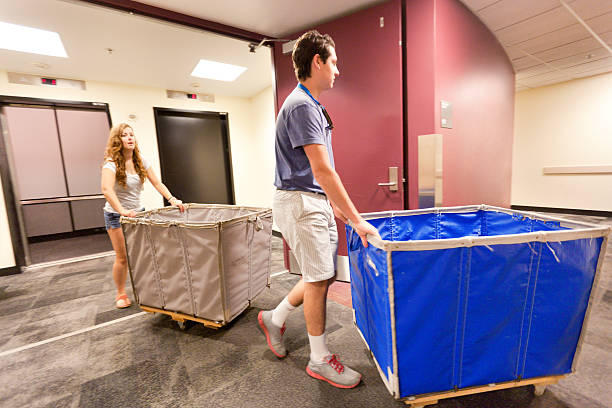
Finals week ends quickly, and housing contracts expire shortly after. Therefore, students must move belongings out fast. However, storage facilities operate on normal business hours and limited staffing. As a result, students queue for units, trucks, and access at the same time.
An overview of why storage is needed for college students shows that storage demand spikes during summer move-out periods when students leave campus. Consequently, availability drops precisely when students need it most. Moreover, last-minute decisions lead to suboptimal choices. Therefore, students often rent units farther from campus or accept inconvenient access hours.
Because timing misaligns, storage creates stress instead of relief during college move-out.
Access and Location Constraints Near Campuses
Storage facilities cluster based on zoning and real estate availability, not student demand. Therefore, many facilities sit miles from campus. As a result, students without cars struggle to transport boxes. Meanwhile, parents who travel in for move-out face traffic and parking constraints near dorms.
Because access requires coordination between dorm move-out windows and storage access hours, small delays cascade. Consequently, families lose time waiting for elevators, loading zones, and unit access. Therefore, even organized students experience bottlenecks.
No Inventory or Visibility for Student Belongings
Traditional storage provides space but not visibility. Students pack boxes quickly, then place them into units without tracking what went where. Consequently, retrieval becomes difficult months later.
Student perspectives highlight how limited storage options increase stress during dorm move-out, especially for out-of-state and international students. Although storage avoids disposal, it does not solve visibility. As a result, students forget what they stored. Therefore, they repurchase items unnecessarily or waste time searching for specific belongings.
Because traditional storage lacks inventory systems tailored to students, confusion persists long after move-out ends.

How Storage Pressure Shows Up at New Jersey Campuses
Rutgers University
At Rutgers, thousands of students leave campus within days. Therefore, storage facilities near New Brunswick and surrounding areas fill quickly. Because many students commute or travel long distances, families rush to secure units. Consequently, access delays stack up across peak days.
For Rutgers-specific timelines and constraints, see the Rutgers college move-out overview at https://www.movana.ai/rutgers-university-move-out.
Princeton University
Princeton students often travel internationally or out of state. Therefore, they rely heavily on short-term storage during college move-out. Because storage options cluster outside campus cores, access requires coordination with limited windows. Consequently, families face time pressure while juggling finals schedules.
For Princeton-specific logistics, see Princeton move-out logistics at https://www.movana.ai/princeton-university-move-out.
Montclair State University, Rowan University, and TCNJ
Across Montclair State, Rowan University, and TCNJ, storage demand concentrates near finals week. Therefore, nearby facilities reach capacity quickly. Because campuses differ in layout and traffic patterns, bottlenecks vary by location. However, the underlying issue remains the same: storage fills during narrow windows.
As a result, students accept inconvenient units or delay decisions. Consequently, costs rise and stress increases. Campus layout and access constraints shape how move-out stress shows up at different schools, as seen in the Rowan vs Montclair State move-out logistics comparison.
What a Better College Move-Out Storage System Should Include
A better system would treat college move-out as a logistics problem, not just a space problem. Therefore, solutions should align with academic calendars, not generic leasing cycles. Moreover, systems should provide visibility into student belongings so students can track what they store.
Additionally, a better system would coordinate access windows with dorm move-out schedules. As a result, students could drop off belongings without waiting hours for unit access. Furthermore, pricing should reflect short-term needs. Therefore, students would not overpay for unused time.
Because demand spikes predictably, systems should scale staffing and access during peak weeks. Consequently, facilities could reduce congestion and delays. Moreover, digital inventories would reduce confusion during retrieval. Therefore, students would spend less time searching and more time settling back into campus life.
Why College Move-Out Needs Systems, Not Just Space
Traditional storage offers space. However, college move-out needs systems. Because thousands of students move at once, coordination matters more than square footage. Therefore, logistics design should prioritize timing, access, and visibility.
When systems align with academic calendars, stress drops. Moreover, when visibility improves, retrieval becomes easier. Consequently, families regain control over belongings after finals week. As a result, college move-out can shift from a yearly scramble to a predictable process.
Until storage solutions adapt to these realities, traditional storage will continue to fail college move-out during peak periods.

